WealthTech in the DACH market: What wealth management software must deliver for banks in Germany, Austria and Switzerland
Lejla Selimovic
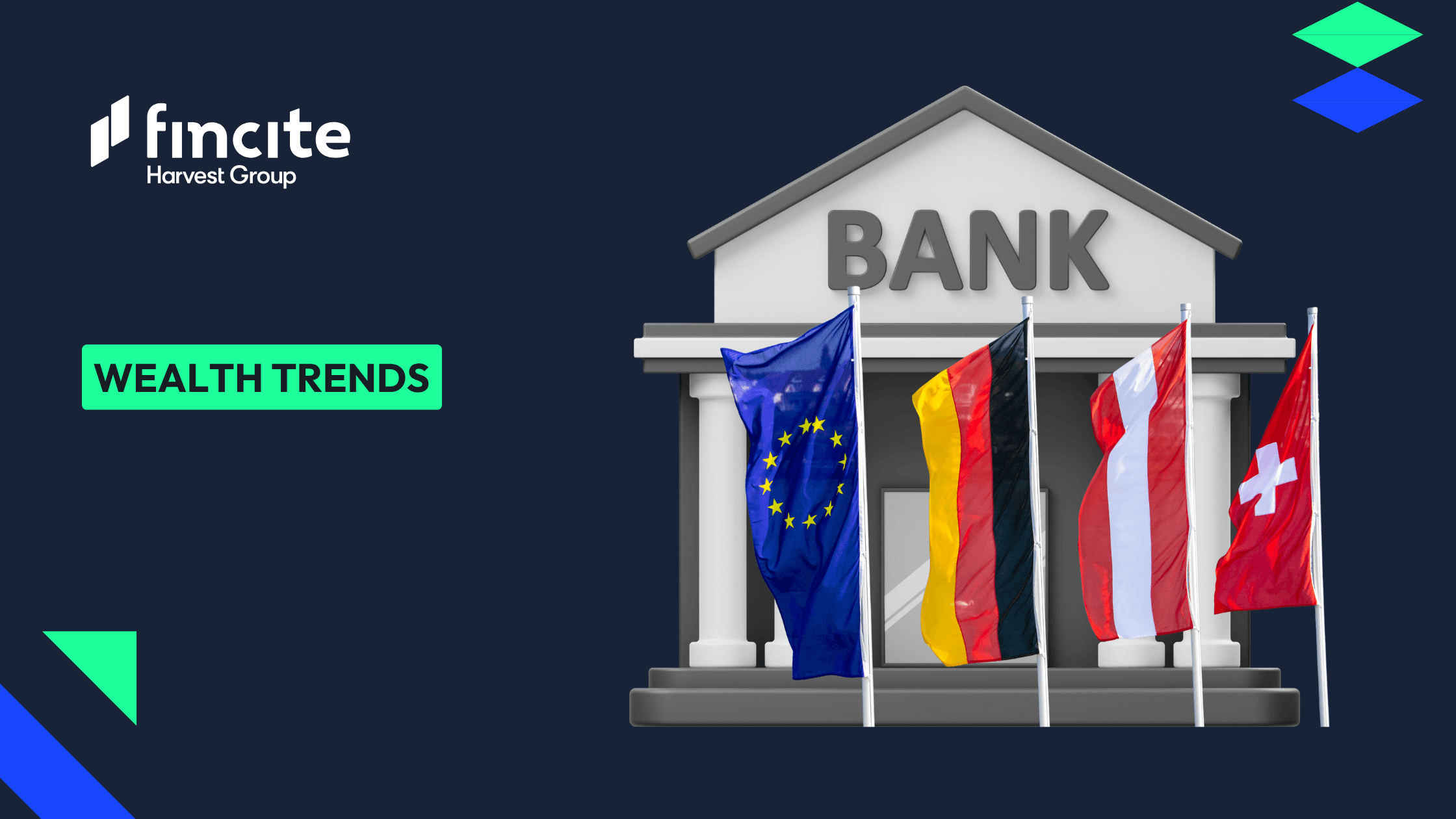
The DACH region is one of the most demanding markets for wealth management software. Three countries, three regulatory regimes, one common expectation: advisory services at the highest regulatory level, documented, traceable and increasingly digital. Banks in Germany, Austria and Switzerland that are renewing their platform are therefore faced with a dual task. They need software that has a deep grasp of the regulatory core of their home market, and at the same time an architecture that extends across national borders.
What makes the DACH market special in terms of regulation?
The requirements are similar in terms of objective and differ in detail. In Germany, MiFID II and the German Securities Trading Act (WpHG) set the framework: suitability tests, suitability statements and cost transparency are mandatory components of any investment advice. In Austria, the Securities Supervision Act 2018 (WAG 2018) applies as the implementation of MiFID II, supervised by the Financial Market Authority (FMA). Switzerland follows its own regime with the Financial Services Act (FIDLEG), which is similar to MiFID II but not identical, supervised by FINMA.
For wealth management software, this means that compliance is not a national checkbox, but an architectural issue. A platform whose regulatory logic is hard-coded must be rebuilt for each market. A platform whose regulatory compliance is configurable extends across market borders.
Which requirements determine the choice of platform in the DACH region?
Regulatory depth in the workflow. In the DACH market, it is not whether a platform has compliance functions that matters, but where they are located. Suitability tests, cost transparency and documentation must occur within the advisory workflow itself, not as an afterthought. The measurable difference: system-side checks reduce investment restriction violations by up to 80 per cent.
Consistency across the entire advisory process. From onboarding and profiling to execution and reporting: in the DACH context, any system disruption not only creates inefficiency, but also documentation risks. The requirement is therefore end-to-end coverage in an integrated system, ideally with modular configuration, so that institutions can choose the building blocks they need.
Asset aggregation. Clients in the DACH region typically hold their assets at several institutions. A platform that consolidates securities accounts, banking accounts and other assets across banks provides advisors with the holistic view on which comprehensive advice is first made possible.
Open architecture. System landscapes in DACH banking have grown organically and are heterogeneous. A new platform must fit into core banking, securities custody and CRM via APIs, instead of forcing a complete replacement.
AI with operational substance. AI is also making its way into selection processes in the DACH market. 20 per cent of wealth managers plan to integrate AI co-pilots by 2026. What is crucial here is not the announcement itself, but whether the AI use cases support the advisor workflow: meeting documentation, report generation, analysis.
How do banks in the DACH region select the right platform?
The selection process should start from your own advisory process, not from feature lists. Three questions structure the evaluation: Firstly, does the platform demonstrably cover the regulatory core of the home market, and indeed within the workflow rather than just on paper? Secondly, how quickly and with what integration effort will it go live? Thirdly, will the architecture support the next five years, including other markets, new regulatory requirements and AI applications?
Institutions that consistently ask these three questions filter the provider field faster than any feature matrix.
Conclusion
Wealth management software for the DACH market must do two things at once: provide regulatory depth in the respective home market and offer an architecture that extends across national borders and waves of requirements. The selection is decided on five points: compliance in the workflow, end-to-end coverage, asset aggregation, open architecture and AI substance. fincite • cios is a modular wealth management software, MiFID II-compliant out-of-the-box, API-first and compatible with existing core banking systems. Over 9,000 wealth managers in Europe work with it today.
See how fincite • cios meets your requirements in 30 minutes.