Product
Clients
About us
Knowledge Hub
Onboarding

Watch the Onboarding Tutorial
Product
Clients
About us
Knowledge Hub
Onboarding
Watch the Onboarding Tutorial
Product
Clients
About us
Knowledge Hub
Onboarding
Watch the Onboarding Tutorial
WealthTech Trends 2026:
Who leads, who follows
WealthTech Trends 2026:
Who leads, who follows

3 reasons to read the radar:
3 reasons
to read the radar:
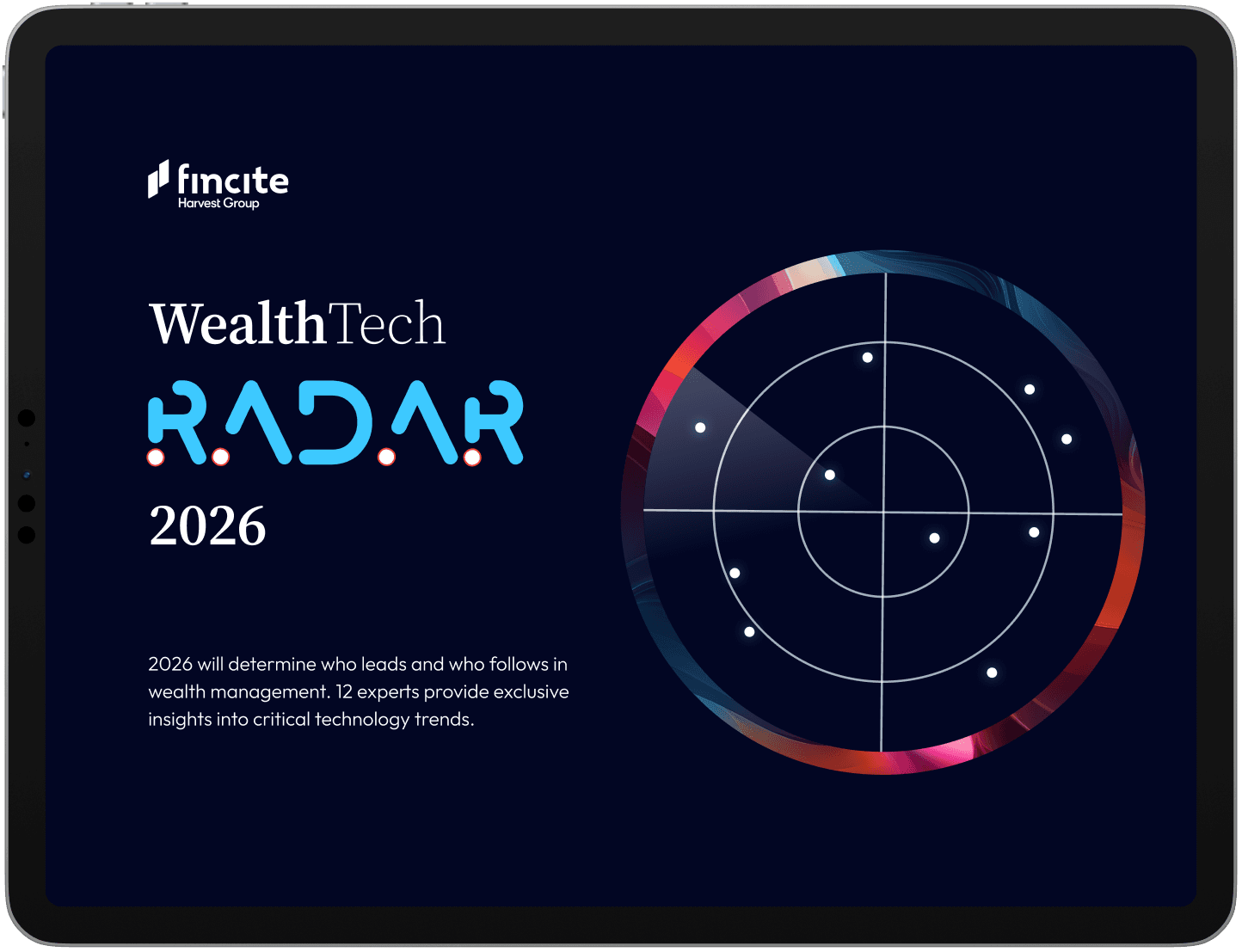
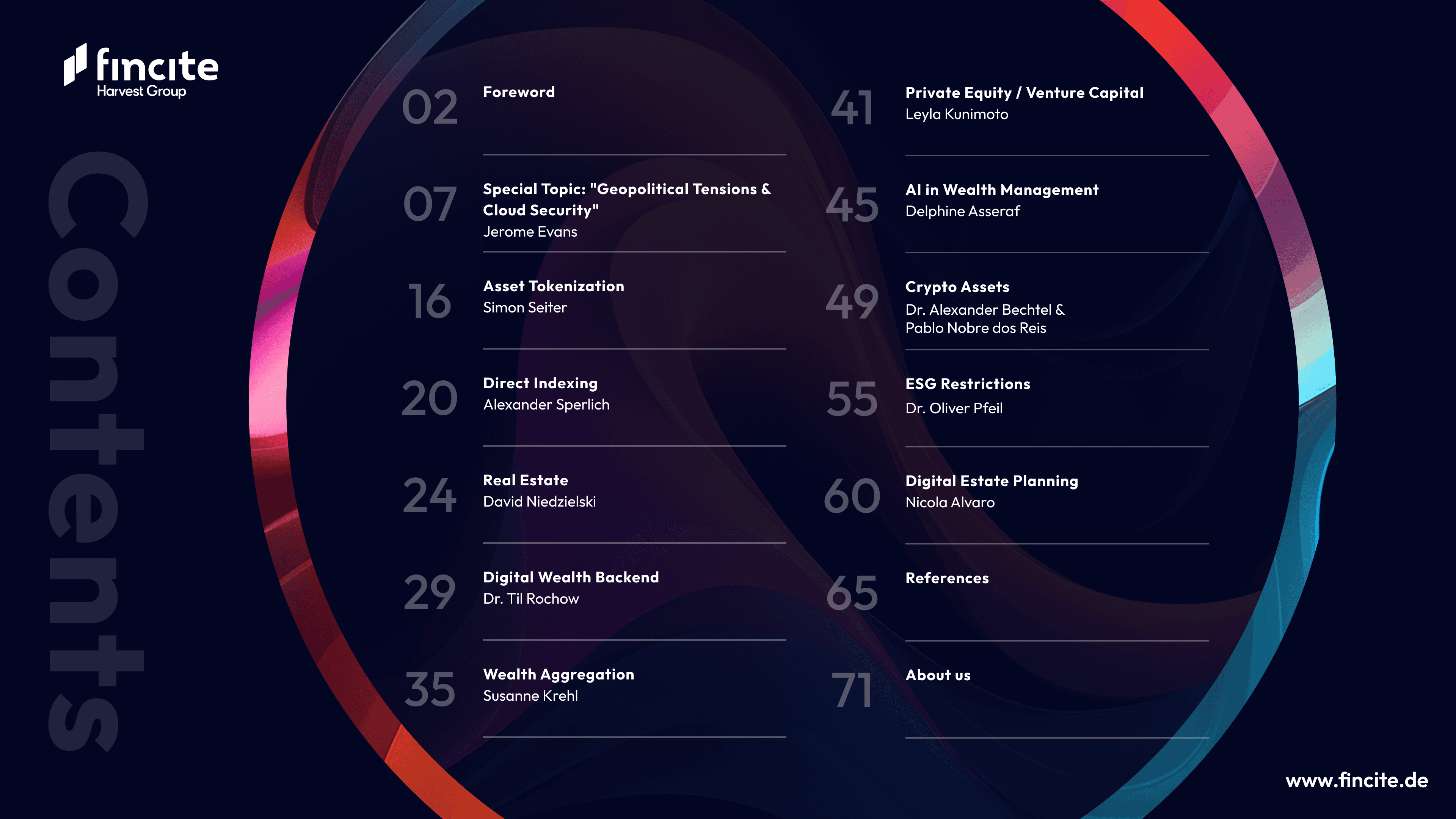
In the WealthTech Radar 2026, 12 industry experts analysed 11 future topics. It is not a trend report, but a concrete blueprint for anyone who wants to lead in Europe's wealth management industry.
11 deciding trends
From AI and cloud sovereignty to tokenization and digital estate planning. The topics that will make a difference in 2026.
From AI and cloud sovereignty to tokenization and digital estate planning. The topics that will make a difference in 2026.
+70 pages analysis
No theory, but well-founded analysis with concrete recommendations for banks, asset managers, and advisors.
No theory, but well-founded analysis with concrete recommendations for banks, asset managers, and advisors.
12 expert opinions
Voices from banks, WealthTechs, and consulting firms including Harvest, DWS, Morningstar, Allianz, and Upvest.
Voices from banks, WealthTechs, and consulting firms including Harvest, DWS, Morningstar, Allianz, and Upvest.

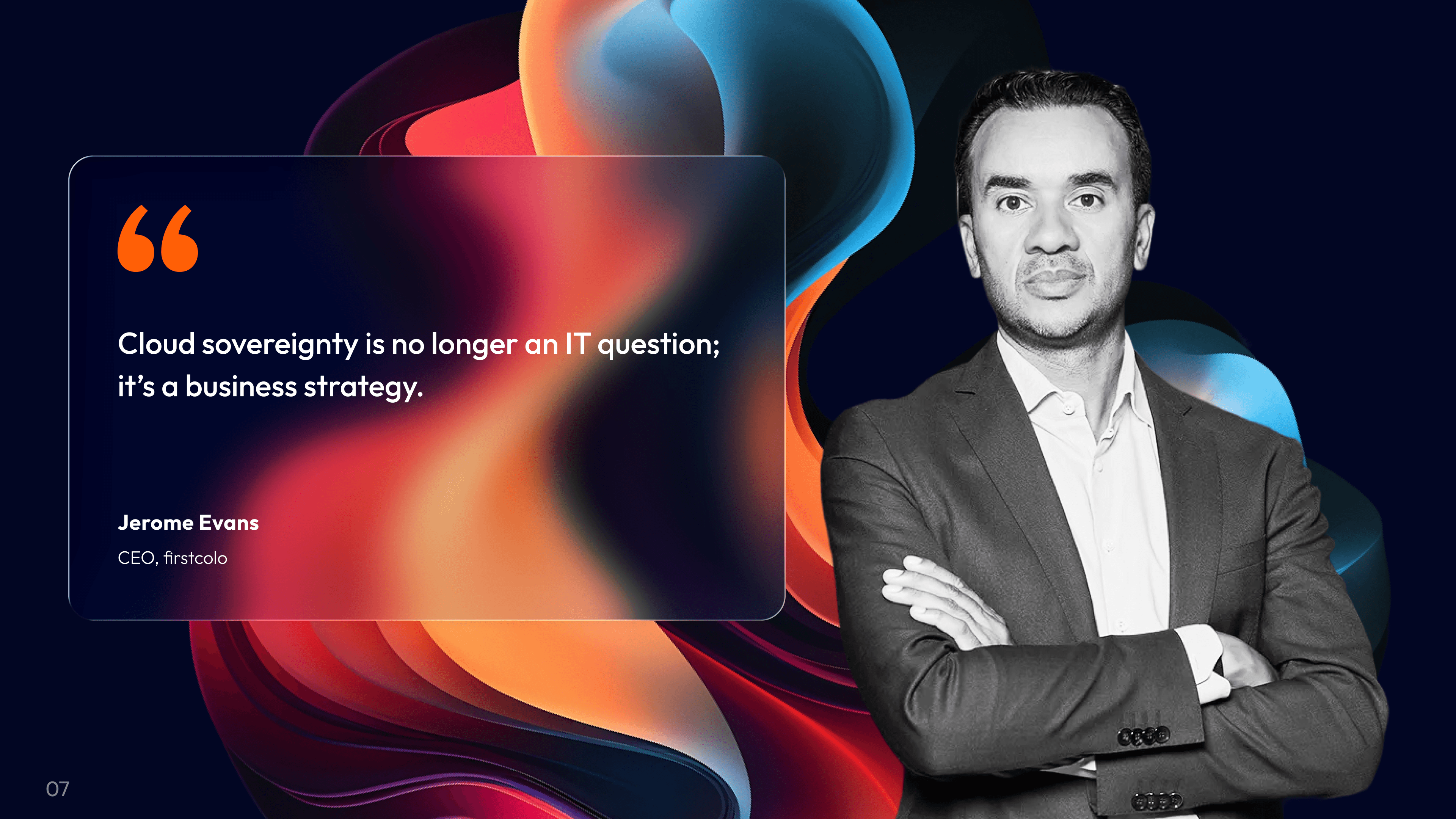
Cloud sovereignty is no longer just an IT issue, but a business strategy.

Jerome Evans
CEO, firstcolo
Tokenized Private Credit remains the fastest growing segment as a niche – bankable, provided governance, data, and infrastructure are in place.
Simon Seiter
Managing Director and CFO / CPO, AllUnity
Where traditional indices provide efficiency, Direct Indexing offers institutional control.

Alexander Sperlich
Managing Director for Germany / Austria / Switzerland, Head of Strategic Business Development EMEA, Morningstar
Data, precise assessability, and digital access make real estate a more attractive and strategically relevant investment component.

David Niedzielski
Managing Director, Sprengnetter Group
Digital securities infrastructure is no longer an experiment, but the foundation for the future of wealth management.

Dr. Til Rochow
CPO & Co-Founder, Upvest
The aggregation of wealth data combined with AI enables significantly more personalised financial products, recommendations, and advice.
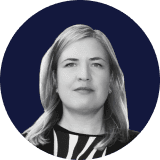
Susanne Krehl
Chief Growth Officer, wealthAPI
Access is broadening, yet private equity remains a long-term investment heavily influenced by the respective manager.

Leyla Kunimoto
Founder, Accredited Investor Insights
Artificial intelligence does not replace humans; it enhances their decision-making capabilities.

Delphine Asseraf
Deputy CEO, Harvest
Anyone looking to tap into digital customer segments or offer more to existing customers should focus on establishing targeted offerings around crypto-assets.

Dr. Alexander Bechtel
Global Head of Digital Products, DWS
Digital assets are increasingly becoming a staple of the global financial markets.

Pablo Nobre dos Reis
Digital Products Analyst, DWS
Greenwashing was yesterday. Those who say ESG must now provide evidence.

Dr. Oliver Pfeil
Chairman of the Management Board of ÖKOWORLD AG
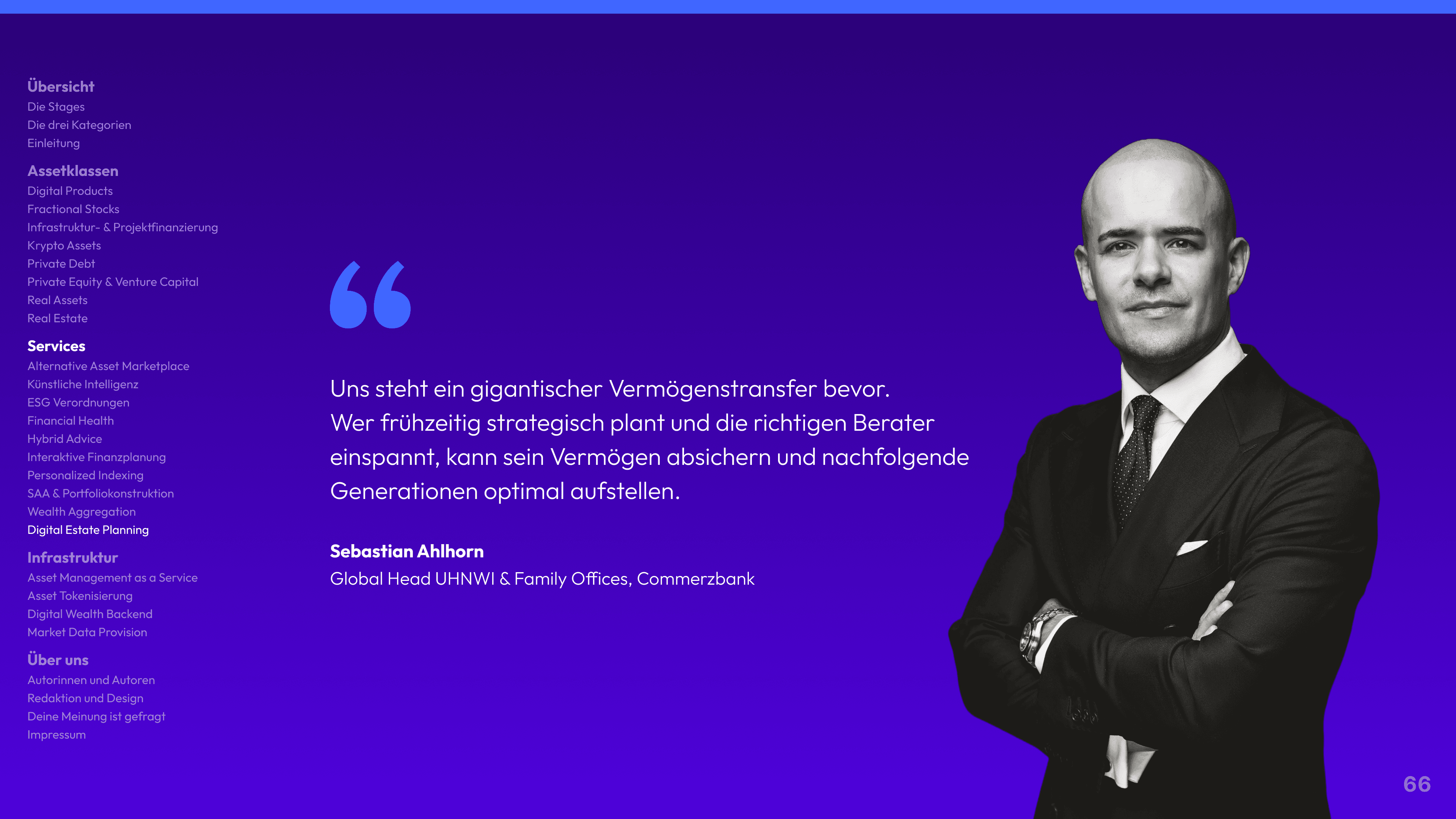
No digital idleness: Your assets require careful planning; otherwise, they will be lost.

Nicola Alvaro
Head of Wealth Services & Distribution, Allianz Life Luxembourg S.A.

Cloud sovereignty is no longer just an IT issue, but a business strategy.
Jerome Evans
CEO, firstcolo
Tokenized Private Credit remains the fastest growing segment as a niche – bankable, provided governance, data, and infrastructure are in place.
Simon Seiter
Managing Director and CFO / CPO, AllUnity
Where traditional indices provide efficiency, Direct Indexing offers institutional control.
Alexander Sperlich
Managing Director for Germany / Austria / Switzerland, Head of Strategic Business Development EMEA, Morningstar
Data, precise assessability, and digital access make real estate a more attractive and strategically relevant investment component.
David Niedzielski
Managing Director, Sprengnetter Group
Digital securities infrastructure is no longer an experiment, but the foundation for the future of wealth management.
Dr. Til Rochow
CPO & Co-Founder, Upvest
The aggregation of wealth data combined with AI enables significantly more personalised financial products, recommendations, and advice.
Susanne Krehl
Chief Growth Officer, wealthAPI
Access is broadening, yet private equity remains a long-term investment heavily influenced by the respective manager.
Leyla Kunimoto
Founder, Accredited Investor Insights
Artificial intelligence does not replace humans; it enhances their decision-making capabilities.
Delphine Asseraf
Deputy CEO, Harvest
Anyone looking to tap into digital customer segments or offer more to existing customers should focus on establishing targeted offerings around crypto-assets.
Dr. Alexander Bechtel
Global Head of Digital Products, DWS
Digital assets are increasingly becoming a staple of the global financial markets.
Pablo Nobre dos Reis
Digital Products Analyst, DWS
Greenwashing was yesterday. Those who say ESG must now provide evidence.
Dr. Oliver Pfeil
Chairman of the Management Board of ÖKOWORLD AG
No digital idleness: Your assets require careful planning; otherwise, they will be lost.
Nicola Alvaro
Head of Wealth Services & Distribution, Allianz Life Luxembourg S.A.

Cloud sovereignty is no longer just an IT issue, but a business strategy.
Jerome Evans
CEO, firstcolo
Tokenized Private Credit remains the fastest growing segment as a niche – bankable, provided governance, data, and infrastructure are in place.
Simon Seiter
Managing Director and CFO / CPO, AllUnity
Where traditional indices provide efficiency, Direct Indexing offers institutional control.
Alexander Sperlich
Managing Director for Germany / Austria / Switzerland, Head of Strategic Business Development EMEA, Morningstar
Data, precise assessability, and digital access make real estate a more attractive and strategically relevant investment component.
David Niedzielski
Managing Director, Sprengnetter Group
Digital securities infrastructure is no longer an experiment, but the foundation for the future of wealth management.
Dr. Til Rochow
CPO & Co-Founder, Upvest
The aggregation of wealth data combined with AI enables significantly more personalised financial products, recommendations, and advice.
Susanne Krehl
Chief Growth Officer, wealthAPI
Access is broadening, yet private equity remains a long-term investment heavily influenced by the respective manager.
Leyla Kunimoto
Founder, Accredited Investor Insights
Artificial intelligence does not replace humans; it enhances their decision-making capabilities.
Delphine Asseraf
Deputy CEO, Harvest
Anyone looking to tap into digital customer segments or offer more to existing customers should focus on establishing targeted offerings around crypto-assets.
Dr. Alexander Bechtel
Global Head of Digital Products, DWS
Digital assets are increasingly becoming a staple of the global financial markets.
Pablo Nobre dos Reis
Digital Products Analyst, DWS
Greenwashing was yesterday. Those who say ESG must now provide evidence.
Dr. Oliver Pfeil
Chairman of the Management Board of ÖKOWORLD AG
No digital idleness: Your assets require careful planning; otherwise, they will be lost.
Nicola Alvaro
Head of Wealth Services & Distribution, Allianz Life Luxembourg S.A.
12 high-profile experts as co-authors
12 high-profile experts as co-authors
12 experts as co-authors
12 experts as co-authors

Leyla Kunimoto
Founder
Accredited Investor Insights
Dr. Alexander Bechtel
Global Head of Digital Products
DWS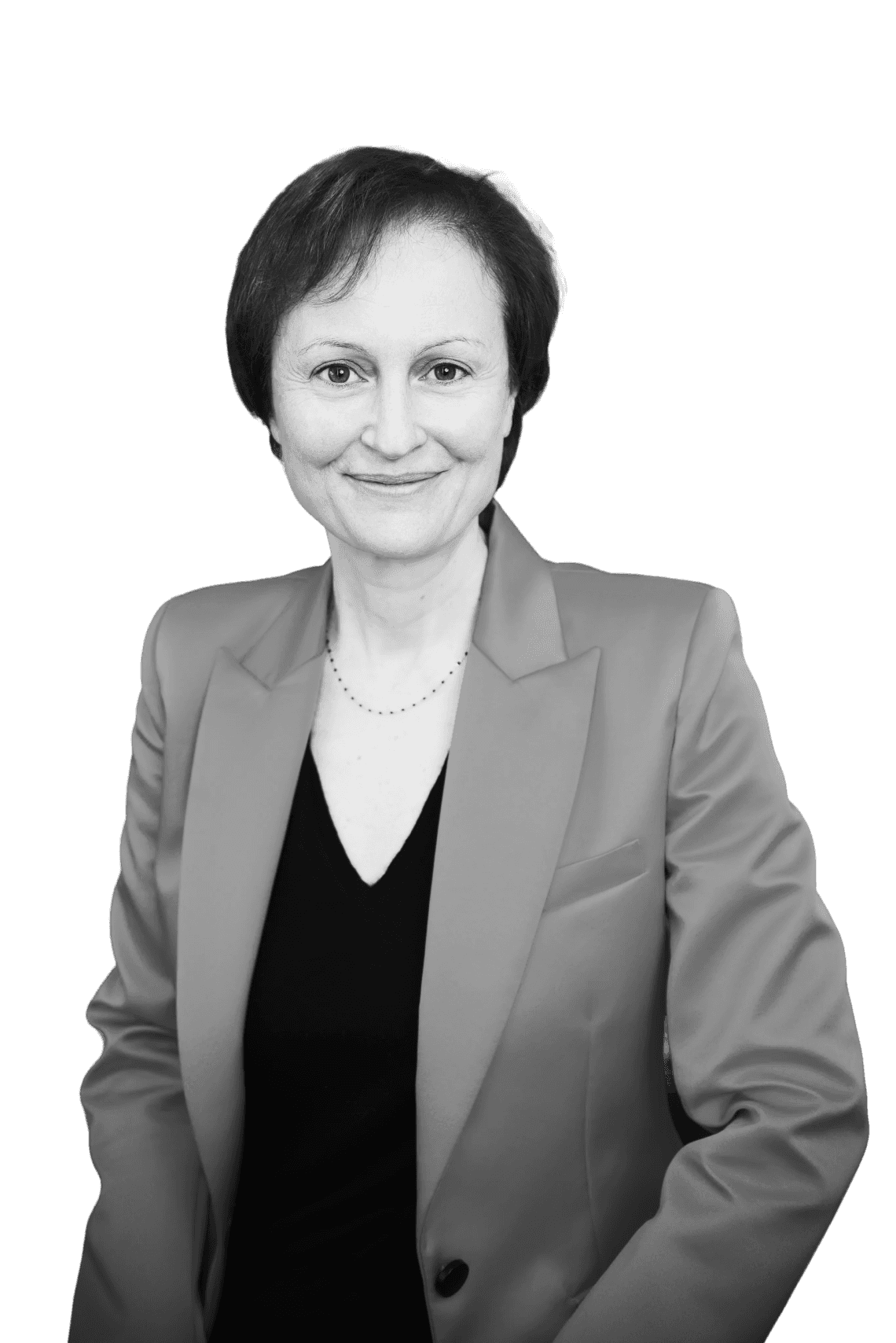
Delphine Asseraf
Deputy CEO
Harvest
Simon Seiter
Managing Director and CFO / CPO
AllUnity
Dr. Til Rochow
CPO & Co-Founder
Upvest
Dr. Oliver Pfeil
Chairman of the Board
ÖKOWORLD AG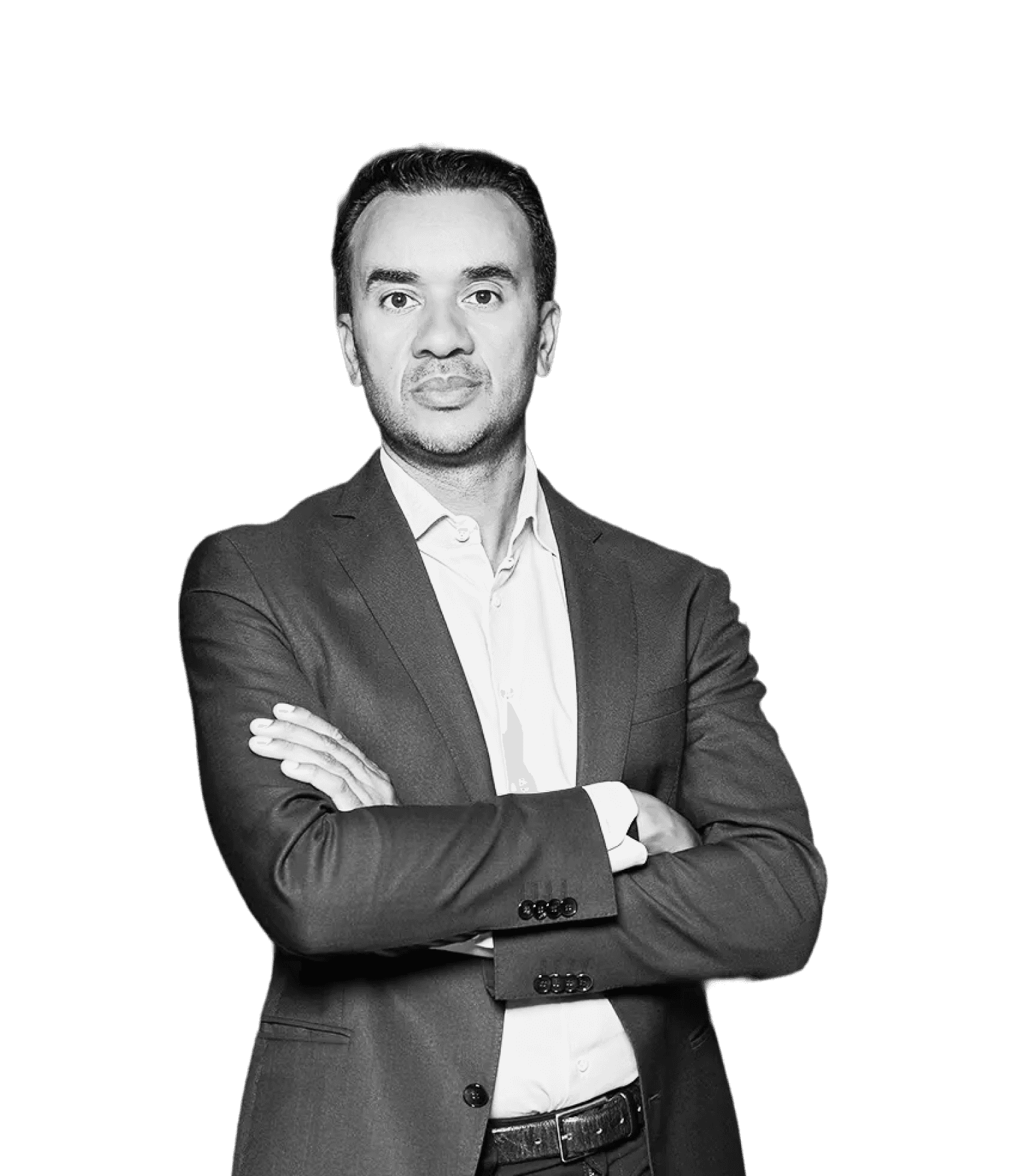
Jerome Evans
CEO
firstcolo
Alexander Sperlich
Managing Director DE/ AT/ CH,
Morningstar
David Niedzielski
Managing Director
Sprengnetter Group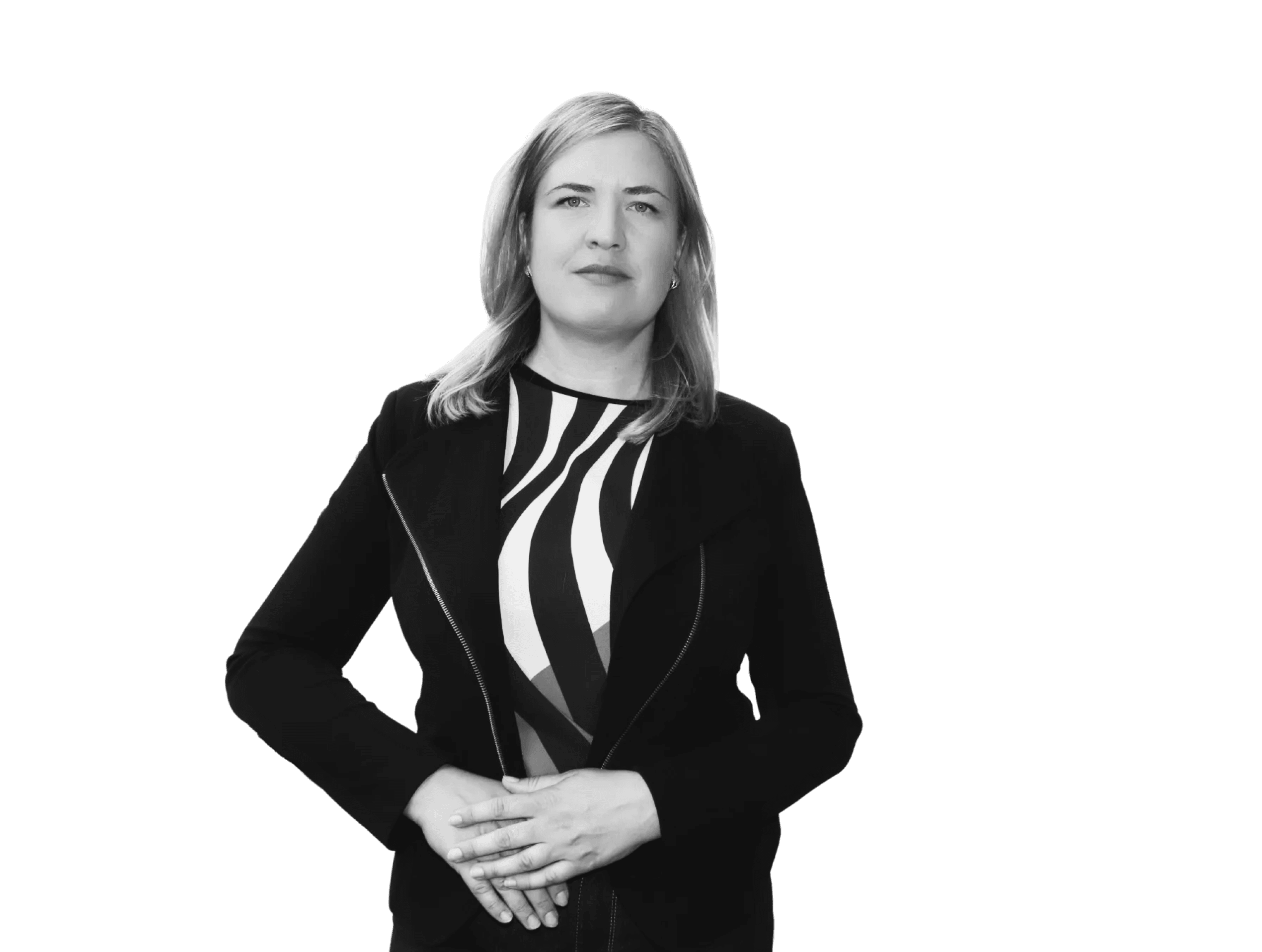
Susanne Krehl
Chief Growth Officer
wealthAPI
Pablo Nobre dos Reis
Digital Products Analyst
DWS
Nicola Alvaro
Head of Wealth Services & Distribution
Allianz Life Luxembourg Ltd.
Leyla Kunimoto
Founder
Accredited Investor InsightsDr. Alexander Bechtel
Global Head of Digital Products
DWSDelphine Asseraf
Deputy CEO
HarvestSimon Seiter
Managing Director and CFO / CPO
AllUnityDr. Til Rochow
CPO & Co-Founder
UpvestDr. Oliver Pfeil
Chairman of the Board
ÖKOWORLD AGJerome Evans
CEO
firstcoloAlexander Sperlich
Managing Director DE/ AT/ CH,
MorningstarDavid Niedzielski
Managing Director
Sprengnetter GroupSusanne Krehl
Chief Growth Officer
wealthAPIPablo Nobre dos Reis
Digital Products Analyst
DWSNicola Alvaro
Head of Wealth Services & Distribution
Allianz Life Luxembourg Ltd.
Leyla Kunimoto
Founder
Accredited Investor InsightsDr. Alexander Bechtel
Global Head of Digital Products
DWSDelphine Asseraf
Deputy CEO
HarvestSimon Seiter
Managing Director and CFO / CPO
AllUnityDr. Til Rochow
CPO & Co-Founder
UpvestDr. Oliver Pfeil
Chairman of the Board
ÖKOWORLD AGJerome Evans
CEO
firstcoloAlexander Sperlich
Managing Director DE/ AT/ CH,
MorningstarDavid Niedzielski
Managing Director
Sprengnetter GroupSusanne Krehl
Chief Growth Officer
wealthAPIPablo Nobre dos Reis
Digital Products Analyst
DWSNicola Alvaro
Head of Wealth Services & Distribution
Allianz Life Luxembourg Ltd.
Leyla Kunimoto
Founder
Accredited Investor InsightsDr. Alexander Bechtel
Global Head of Digital Products
DWSDelphine Asseraf
Deputy CEO
HarvestSimon Seiter
Managing Director and CFO / CPO
AllUnityDr. Til Rochow
CPO & Co-Founder
UpvestDr. Oliver Pfeil
Chairman of the Board
ÖKOWORLD AGJerome Evans
CEO
firstcoloAlexander Sperlich
Managing Director DE/ AT/ CH,
MorningstarDavid Niedzielski
Managing Director
Sprengnetter GroupSusanne Krehl
Chief Growth Officer
wealthAPIPablo Nobre dos Reis
Digital Products Analyst
DWSNicola Alvaro
Head of Wealth Services & Distribution
Allianz Life Luxembourg Ltd.

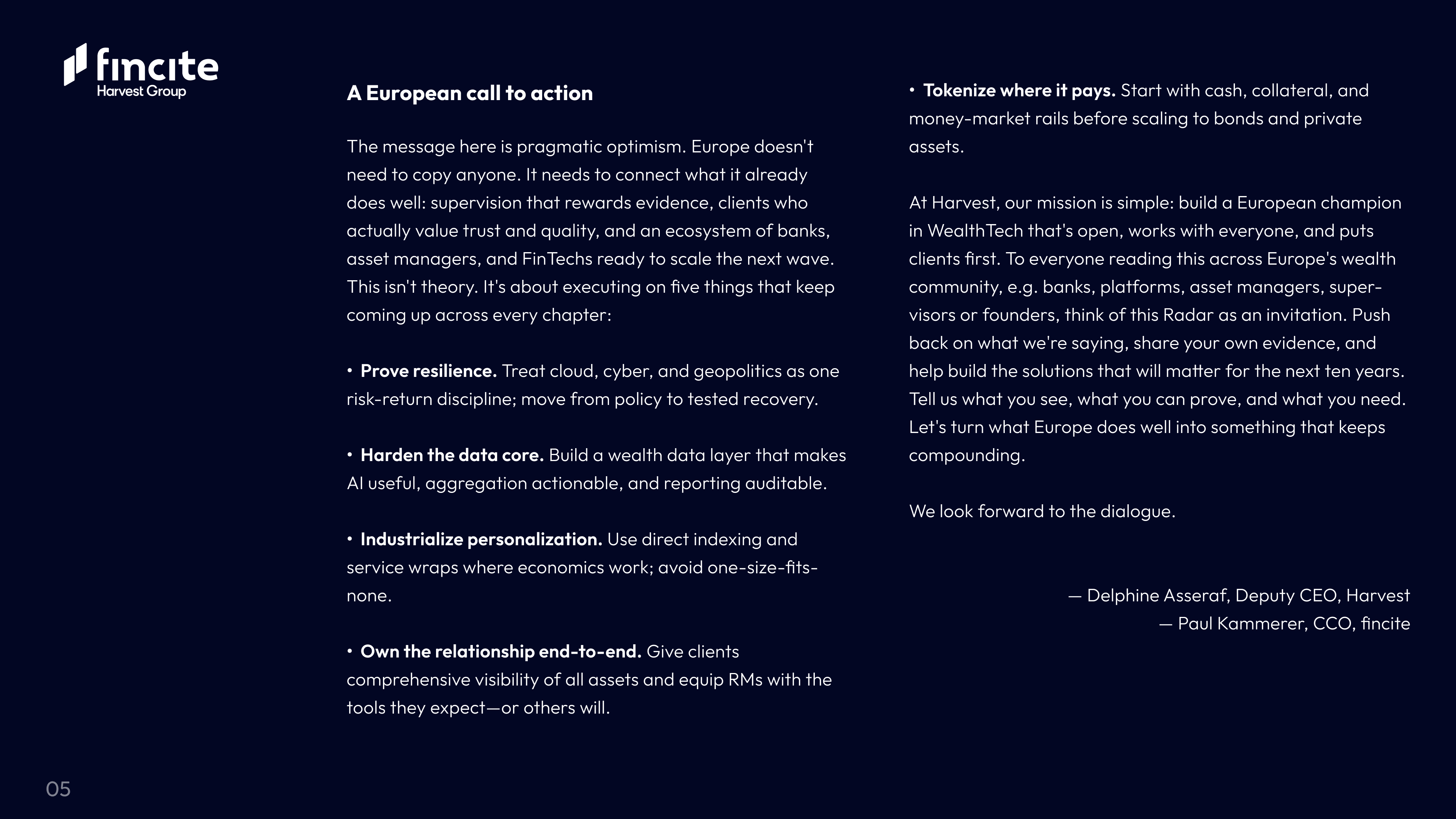
These are the WealthTech trends you should keep an eye on in 2026!
These are the WealthTech trends you should keep an eye on in 2026!
Resilience, AI, Cloud Sovereignty: The wealth management sector faces decisions in 2026 that cannot wait.
Which technologies will truly prevail? Where will measurable competitive advantages arise? And what regulatory changes will directly affect your business?
The WealthTech Radar 2026 provides the practical blueprint for this.
12 industry experts analyze the topics that will determine who leads the European wealth sector in the coming years.
Resilience, AI, Cloud Sovereignty: The wealth management sector faces decisions in 2026 that cannot wait.
Which technologies will truly prevail? Where will measurable competitive advantages arise? And what regulatory changes will directly affect your business?
The WealthTech Radar 2026 provides the practical blueprint for this.
12 industry experts analyze the topics that will determine who leads the European wealth sector in the coming years.

These are the WealthTech trends you should keep an eye on in 2026!
Resilience, AI, Cloud Sovereignty: The wealth management industry faces decisions in 2026 that cannot wait.
Which technologies will actually prevail? Where is measurable competitive advantage emerging? And what regulatory changes will directly affect your business?
The WealthTech Radar 2026 provides the practical blueprint for this.
12 industry experts analyze the topics that will determine who will lead the European wealth sector in the coming years.
Overview
WTR 2026
Delphine Asseraf, Harvest
81% of companies name AI as the most important technology of the decade. Only 25% use it as a genuine competitive advantage.
This chapter shows where the gap between aspiration and reality arises, and which levers banks and advisers can now set in motion concretely: from the RM copilot to automated suitability assessment, built on data foundations that will endure in the long term.
Delphine Asseraf, Harvest
81% of companies name AI as the most important technology of the decade. Only 25% use it as a genuine competitive advantage.
This chapter shows where the gap between aspiration and reality arises, and which levers banks and advisers can now set in motion concretely: from the RM copilot to automated suitability assessment, built on data foundations that will endure in the long term.
Dr. Alexander Bechtel & Pablo Nobre dos Reis, DWS
Stablecoins have reached a market capitalisation of US$300 billion. Bitcoin ETFs alone hold over US$145 billion in the US. MiCA is in force. The regulatory framework banks have been waiting for is here.
This chapter breaks down the three relevant crypto categories for wealth management and shows why integrating custody, access and advisory context into existing systems is no longer optional.
Dr. Alexander Bechtel & Pablo Nobre dos Reis, DWS
Stablecoins have reached a market capitalisation of US$300 billion. Bitcoin ETFs alone hold over US$145 billion in the US. MiCA is in force. The regulatory framework banks have been waiting for is here.
This chapter breaks down the three relevant crypto categories for wealth management and shows why integrating custody, access and advisory context into existing systems is no longer optional.
Dr. Oliver Pfeil, ÖKOWORLD AG
Two-thirds of German private investors are interested in sustainable investments. Only 14% actually invest in them. This is not a demand problem. It is a credibility problem.
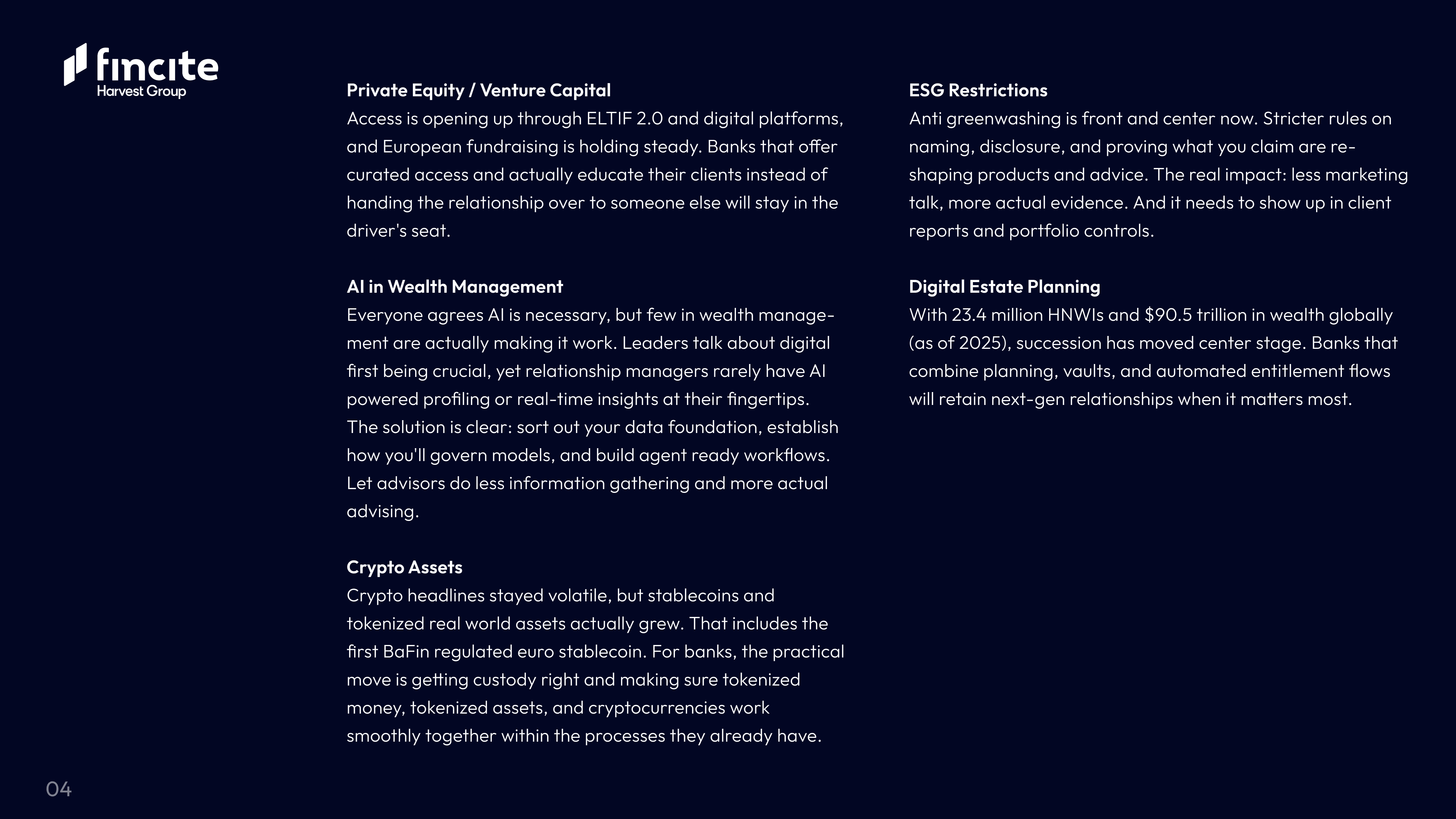
This chapter examines the regulatory changes that will come into force from September 2026: what fund naming rules, SFDR obligations and the Empowering Consumers Directive mean in practice, and how advisers can turn ESG from a documentation burden into an advisory opportunity.
Dr. Oliver Pfeil, ÖKOWORLD AG
Two-thirds of German private investors are interested in sustainable investments. Only 14% actually invest in them. This is not a demand problem. It is a credibility problem.
This chapter examines the regulatory changes that will come into force from September 2026: what fund naming rules, SFDR obligations and the Empowering Consumers Directive mean in practice, and how advisers can turn ESG from a documentation burden into an advisory opportunity.
Nicola Alvaro, Allianz Life Luxembourg
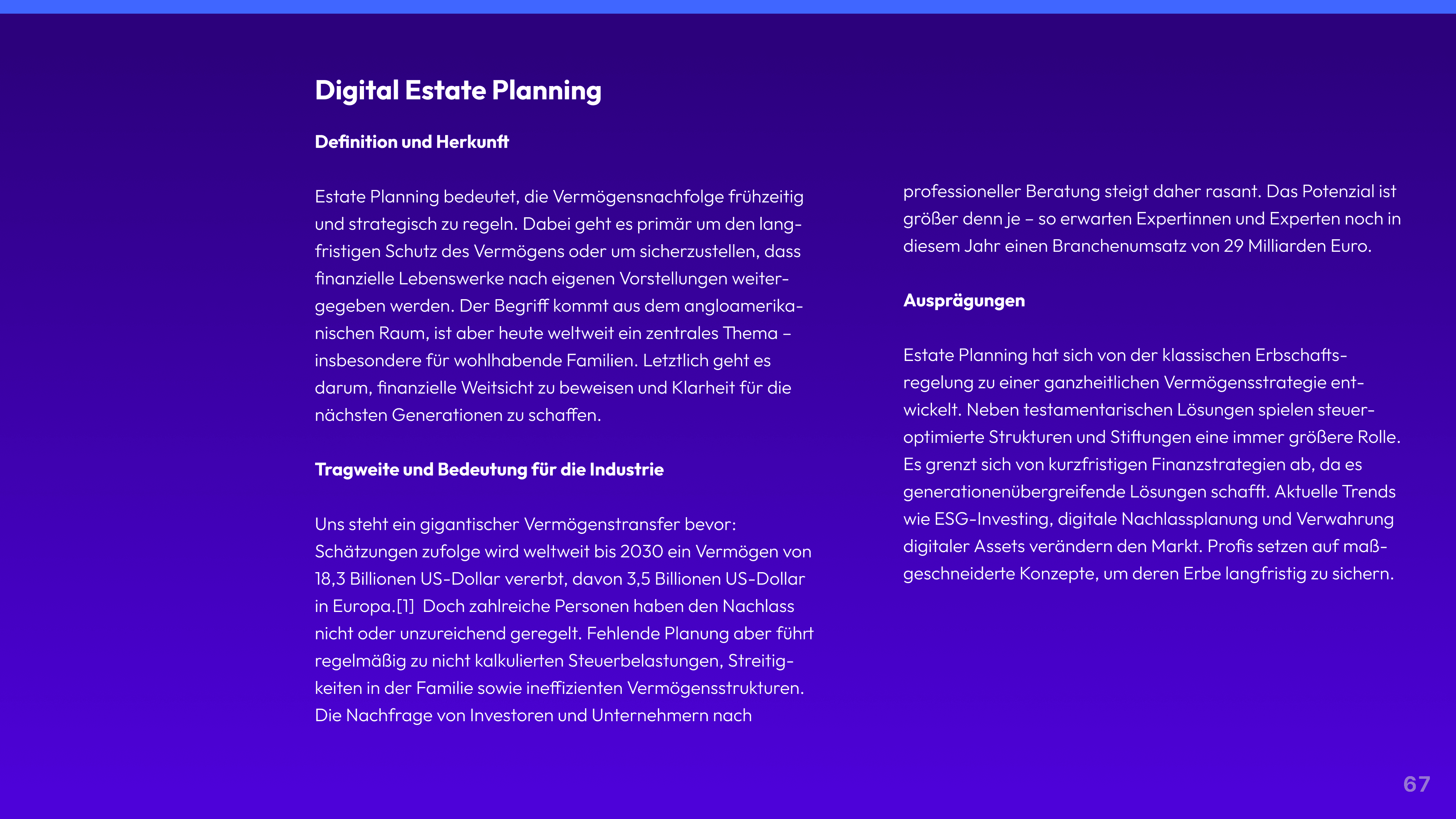
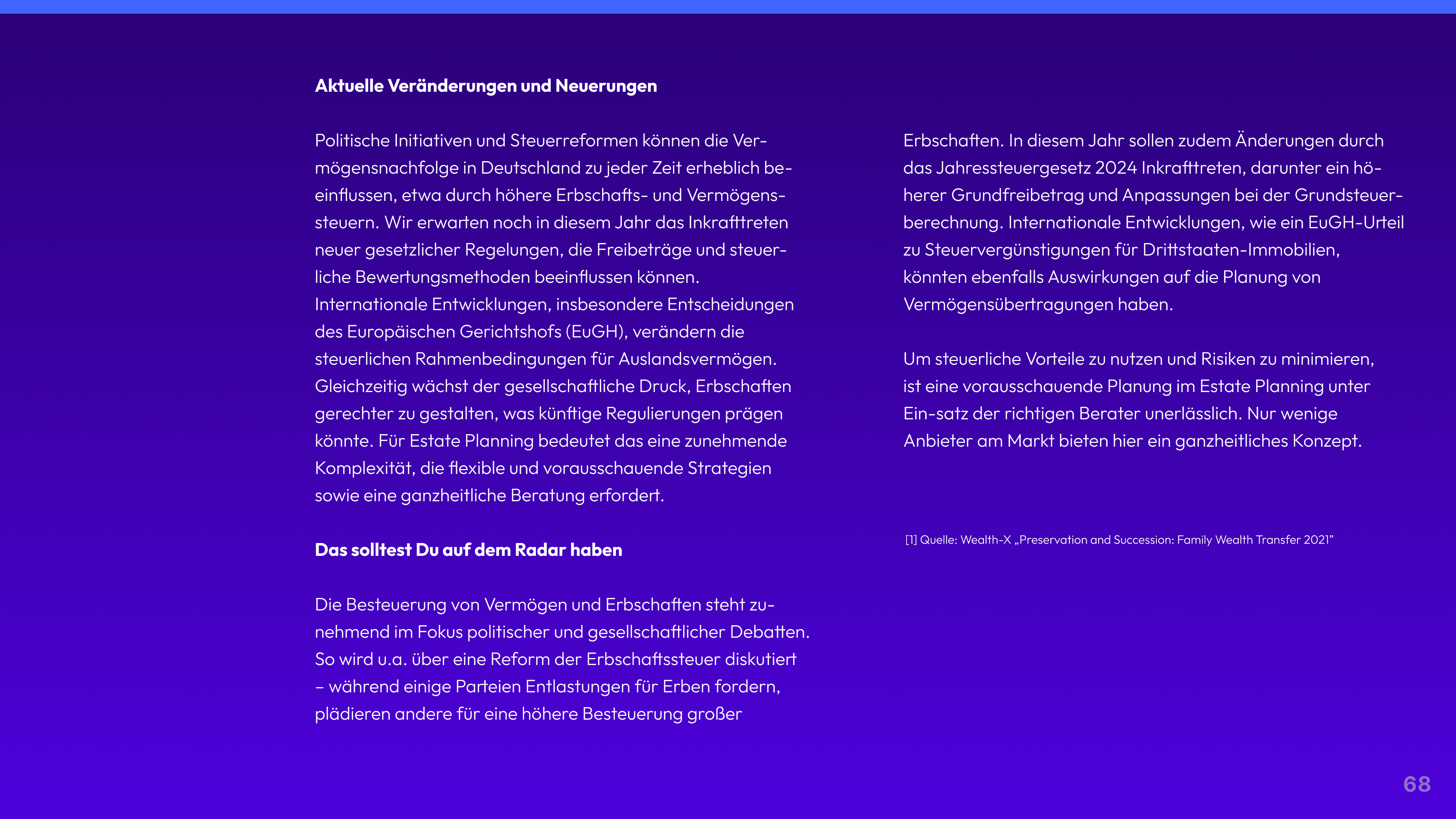
64% of investors consider preparation for wealth transfer to be very important. Only 28% have been seriously addressed by their adviser about it. The great wealth transfer is already under way, and most institutions are still not part of the conversation.
This chapter explains what digital estate planning means across custodial accounts, private market investments, wallets and digital assets, and what banks must provide in order to remain relevant to both the transferring and receiving generation.
Nicola Alvaro, Allianz Life Luxembourg
64% of investors consider preparation for wealth transfer to be very important. Only 28% have been seriously addressed by their adviser about it. The great wealth transfer is already under way, and most institutions are still not part of the conversation.
This chapter explains what digital estate planning means across custodial accounts, private market investments, wallets and digital assets, and what banks must provide in order to remain relevant to both the transferring and receiving generation.
Leyla Kunimoto, Accredited Investor Insights
European private equity fundraising reached a new cycle high in 2024 at €140.9 billion. Digital platforms have simplified access and lowered minimum investments. For banks, the question is no longer whether private equity belongs in wealth portfolios, but how to integrate it without handing the client relationship over to fintech platforms.
This chapter shows the current state of private markets, how digital distribution is reshaping access for high-net-worth clients, and what a realistic integration path looks like for banks and advisers in the DACH region.
Leyla Kunimoto, Accredited Investor Insights
European private equity fundraising reached a new cycle high in 2024 at €140.9 billion. Digital platforms have simplified access and lowered minimum investments. For banks, the question is no longer whether private equity belongs in wealth portfolios, but how to integrate it without handing the client relationship over to fintech platforms.
This chapter shows the current state of private markets, how digital distribution is reshaping access for high-net-worth clients, and what a realistic integration path looks like for banks and advisers in the DACH region.
Jerome Evans, firstcolo
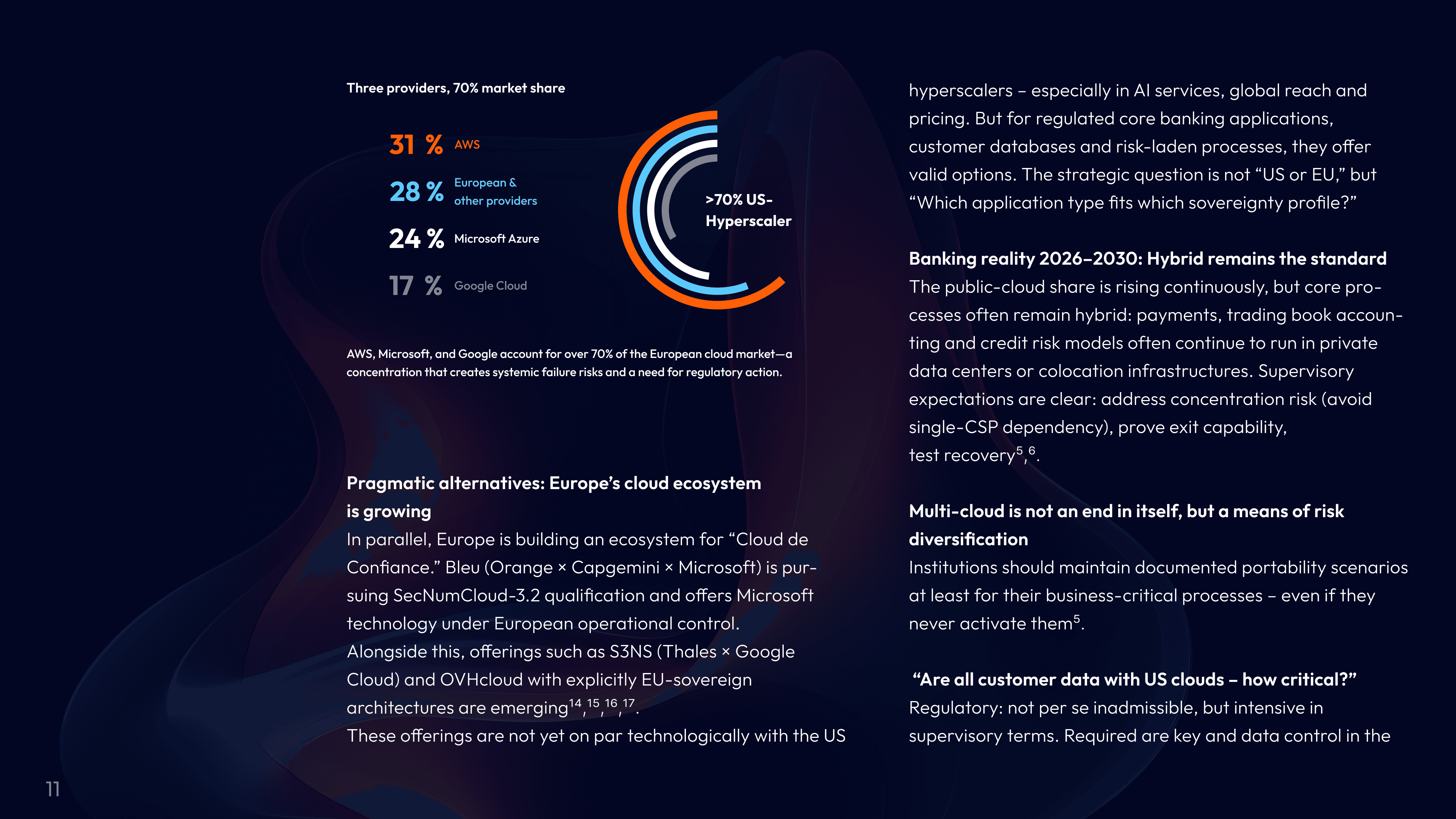
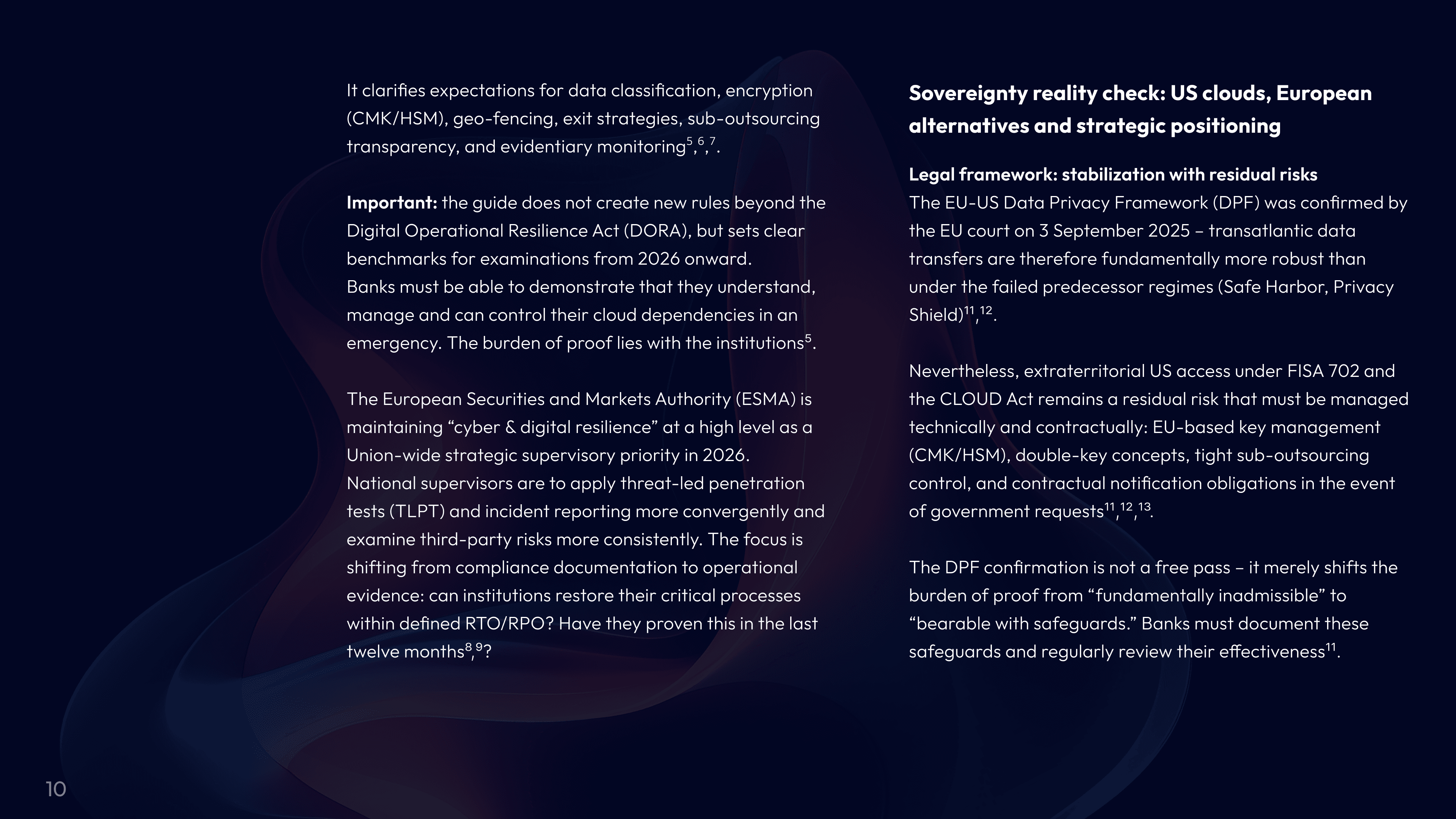
The AWS outage in October 2025 made visible what the industry has long known: cloud concentration is a systemic risk. At the same time, DORA obligations are taking effect, the US Cloud Act is creating ongoing data sovereignty conflicts, and the ECB has published new outsourcing guidelines.
This chapter examines what geopolitical tensions mean for cloud strategies in the financial sector, how DORA changes the outsourcing calculation, and which sovereign cloud alternatives are realistically available today for European banks.
Jerome Evans, firstcolo
The AWS outage in October 2025 made visible what the industry has long known: cloud concentration is a systemic risk. At the same time, DORA obligations are taking effect, the US Cloud Act is creating ongoing data sovereignty conflicts, and the ECB has published new outsourcing guidelines.
This chapter examines what geopolitical tensions mean for cloud strategies in the financial sector, how DORA changes the outsourcing calculation, and which sovereign cloud alternatives are realistically available today for European banks.
Simon Seiter, AllUnity
Tokenised money market funds, bonds and shares are already in use. Stablecoins are becoming settlement infrastructure. The market is moving from pilots into production, and the gap between institutions with ready infrastructure and those without is widening quickly.
This chapter covers the three tokenisation layers that will be decisive in 2026, where real traction is emerging and where the hype still outweighs reality, and how banks can position themselves on the right side of the new settlement infrastructure.
Simon Seiter, AllUnity
Tokenised money market funds, bonds and shares are already in use. Stablecoins are becoming settlement infrastructure. The market is moving from pilots into production, and the gap between institutions with ready infrastructure and those without is widening quickly.
This chapter covers the three tokenisation layers that will be decisive in 2026, where real traction is emerging and where the hype still outweighs reality, and how banks can position themselves on the right side of the new settlement infrastructure.
Alexander Sperlich, Morningstar
Direct Indexing has been an institutional tool for decades. Lower minimums, better technology and growing demand for customisation are now bringing it into broader Wealth Management. For advisers, it is one of the few ways to deliver measurable, individual added value that a standard fund cannot replicate.
This chapter explains how Direct Indexing works in practice, where it generates the greatest tangible client benefits (tax efficiency, ESG alignment, factor tilts), and what infrastructure wealth managers need to offer it without additional operational complexity.
Alexander Sperlich, Morningstar
Direct Indexing has been an institutional tool for decades. Lower minimums, better technology and growing demand for customisation are now bringing it into broader Wealth Management. For advisers, it is one of the few ways to deliver measurable, individual added value that a standard fund cannot replicate.
This chapter explains how Direct Indexing works in practice, where it generates the greatest tangible client benefits (tax efficiency, ESG alignment, factor tilts), and what infrastructure wealth managers need to offer it without additional operational complexity.
David Niedzielski, Sprengnetter
Property is the largest asset class held by most private clients, and at the same time the least integrated in the wealth management advisory process. Valuations are outdated, data is fragmented, and advisers often have no reliable picture of what a client actually owns.
This chapter shows how digital valuation data and platform integration can change that, what role property plays in a holistic view of wealth, and how banks and advisers can incorporate property into portfolio advice without having to become property specialists.
David Niedzielski, Sprengnetter
Property is the largest asset class held by most private clients, and at the same time the least integrated in the wealth management advisory process. Valuations are outdated, data is fragmented, and advisers often have no reliable picture of what a client actually owns.
This chapter shows how digital valuation data and platform integration can change that, what role property plays in a holistic view of wealth, and how banks and advisers can incorporate property into portfolio advice without having to become property specialists.
Dr. Til Rochow, Upvest
Most wealth management platforms run on infrastructure that was not built for today’s products, speeds and customer expectations. The backend is where digital transformation either becomes reality or stalls.
This chapter describes what a modern, API-based wealth backend looks like, which components banks should build themselves and which they should buy, and how modular infrastructure enables the product flexibility and speed to market that legacy core systems block.
Dr. Til Rochow, Upvest
Most wealth management platforms run on infrastructure that was not built for today’s products, speeds and customer expectations. The backend is where digital transformation either becomes reality or stalls.
This chapter describes what a modern, API-based wealth backend looks like, which components banks should build themselves and which they should buy, and how modular infrastructure enables the product flexibility and speed to market that legacy core systems block.
Susanne Krehl, wealthAPI
Most clients hold assets with several custodians, banks and platforms. Most advisers still piece this picture together manually. Without a consolidated view, personalised advice at scale is not possible.
This chapter explains how Wealth Aggregation works today, what Open Banking and access to account data mean for the quality of advice, and how banks and independent advisers build the holistic client view that is increasingly a basic expectation, not a differentiator.
Susanne Krehl, wealthAPI
Most clients hold assets with several custodians, banks and platforms. Most advisers still piece this picture together manually. Without a consolidated view, personalised advice at scale is not possible.
This chapter explains how Wealth Aggregation works today, what Open Banking and access to account data mean for the quality of advice, and how banks and independent advisers build the holistic client view that is increasingly a basic expectation, not a differentiator.
Sneak preview
Sneak preview
A first look at selected trends. The complete WealthTech Radar 2026 is available for free as a PDF.
A first look at selected trends. The complete WealthTech Radar 2026 is available for free as a PDF.

The blueprint for Europe's wealth management industry
The blueprint for Europe’s wealth management industry
The blueprint for Europe's wealth management sector
Download WealthTech Radar 2026 now for free!
Download WealthTech Radar 2026 now for free!
Download WealthTech Radar 2026 now for free!
Fincite GmbH
Franklinstr. 52
60486 Frankfurt
Wealth management/
Financial planning
Modular wealth
management software
Features fincite • cios
Follow us on:


Fincite GmbH
Franklinstr. 52
60486 Frankfurt
Wealth management/
Financial planning
Modular wealth
management software
Features fincite • cios
Follow us on:
Fincite GmbH
Franklinstr. 52
60486 Frankfurt
Wealth management/
Financial planning
Modular wealth
management software
Features fincite • cios
© 2026 Fincite GmbH. All rights reserved.
Follow us on: